How does a solo player hold a base right next to Oil Rig in Rust?
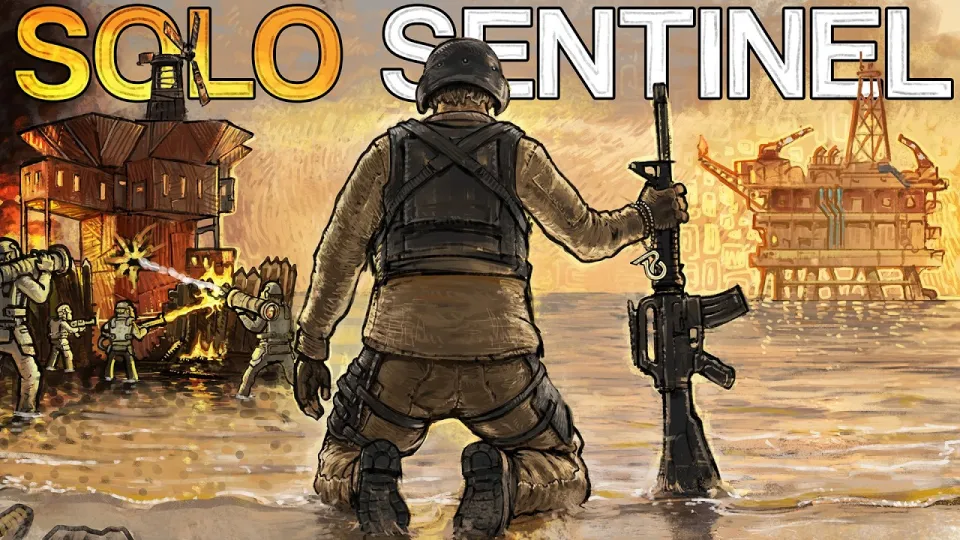
Video: The Solo Sentinel - Rust
You can order the same kind of articles for your own video to boost it on YouTube and Google. Just message the Telegram bot @sat_sit_bot. Articles with your video embedded are written and posted by the bot itself — on popular topical sites (no ads). Your first 50 articles are free.
· based on the channel Blooprint
A solo player holds ground next to Oil Rig in Rust by treating the monument as both a loot source and a threat filter: build close enough to farm it constantly, keep the base small and layered, and invest early in turrets and upgraded walls so that any group pushing you has to pay for every meter. Blooprint's solo story The Solo Sentinel is built around exactly that idea, and you can follow his live runs and wipe-day starts on his Twitch channel.
What The Solo Sentinel is and why the Oil Rig location matters
The Solo Sentinel is a solo Rust feature from Blooprint in which one player builds a base immediately next to Oil Rig and defends it against groups for the length of a wipe. Oil Rig is one of the highest-value monuments in the game: it is surrounded by water, reached by boat or by swimming, and its loot rooms and crate spawns reward players who can survive the approach and the extract. That geography is the whole point of the base location. A solo who lives on the shoreline near the rig can farm it repeatedly without a long, exposed trip home, and every attacker has to cross open water or a narrow approach while the defender fights from owned ground.
Building next to a monument also changes the threat model. Groups do not stumble onto the base by accident; they come deliberately, usually with rockets, and they come at night. The video's narrative leans into that: a small footprint, a compact loot core, and a defender who knows every angle of his own compound.
The solo snowball from wipe day to the M16
A solo Rust wipe follows a predictable escalation, and the video tracks it step by step. The early phase is the snowball: gather with primitive tools, craft a starter base and a codelock, take small fights, and convert every kill into gear you did not have to craft. From there the progression runs through Tier 1 weapons and basic armor, into Tier 2 crafting, and finally into the high-tier loot that makes Oil Rig worth contesting.
The M16 sits at the top of that curve. It is a high-tier weapon fed by 5.56 ammunition, and getting one as a solo means either crafting it after a lucky blueprint pull or taking it off a group that brought it to your door. The video's arc is built on that tension: the solo does not out-farm a clan, he out-positions it, and every tier of gear he reaches makes the next defense cheaper because the attackers have to bring more to break through.
How to defend a solo base against rockets and night raids
The defense in The Solo Sentinel works because it is layered rather than large. Practical principles a solo can copy:
- Keep the loot core small and central, so a single breached wall does not expose everything.
- Upgrade the outer shell first; stone stops primitive raids, sheet metal and armored walls stop rockets long enough for you to respond.
- Place turrets so they cover the approach, not the courtyard; a turret that only sees inside the base is already too late.
- Use the terrain. Water on one side and a rock or cliff on the other cuts the number of angles an attacker can use.
- Expect the raid at night and at anti-social hours; the video's most memorable push arrives in the small hours, which is normal for Rust.
- Keep a fighting kit and spare weapons in a secondary stash so a lost fight does not end the wipe.
Rocket raids against a solo are usually about economics. A group that spends dozens of rockets to reach a modest solo loot room has lost value even if it wins the breach, and the defender's job is to make that math as bad as possible.
Snowballing, codelocks and the small decisions that decide a wipe
Solo Rust is decided by small efficiencies: a codelock crafted at the right moment, a furnace running while you farm, a boat parked where you can reach it under fire. The video's audience picked up on exactly these beats, from the early codelock craft to the base being upgraded and turreted late at night while the raiders were still approaching. That is the honest texture of solo play, and it is why the format reads as a story rather than a highlight reel: the viewer sees the preparation that makes the defense possible, not just the fight.
Snowballing is the other half. A solo who only farms stays behind; a solo who converts every fight into gear climbs tiers faster than any base design allows. The Oil Rig location feeds that loop, because the loot from the rig and from the players contesting it arrives at your door.
What viewers actually ask about solo Rust content
The most common reaction to The Solo Sentinel was a request for more solo material, and the reasons are consistent. Solo videos let the creator narrate his own decisions directly to the audience instead of talking to teammates, so the play-by-play reasoning stays visible. Viewers also said that watching a player reach Tier 2 and Tier 3 in twenty minutes with a full team is less engaging than the slower, more relatable grind of a lone player.
A second theme is honesty about outcomes. The base next to Oil Rig does not end the video as an untouched fortress; the pressure is real, and the defense is respected by the people attacking it. A third is the base design itself: players report copying the layout and enjoying how attackers react to a defender who appears from unexpected angles, including from the water.
All Blooprint links from the video
- Twitch live streams: https://www.twitch.tv/blooprint
- Kick: https://kick.com/blooprint
- TikTok: https://www.tiktok.com/@blooprintgames
- Twitter: https://twitter.com/blooprintgames
- Discord community: https://discord.gg/blooprint
Summary
The Solo Sentinel is a compact lesson in solo Rust: pick a high-value monument, build close enough to farm it, keep the base small and layered, and spend on turrets and wall upgrades before the first rocket arrives. Blooprint's breakdown follows a full wipe arc from the opening snowball through Oil Rig loot and the M16 to a night defense that a group has to pay for in rockets. The takeaway for any solo is that location and preparation beat raw numbers. If you want to watch these runs live and catch the next wipe from the first minute, follow Blooprint on Twitch.
Key takeaways
- Blooprint's The Solo Sentinel is a solo-only Rust story built around a base placed directly next to Oil Rig.
- The run starts on a fresh wipe and follows the classic solo snowball: primitive gear first, then Oil Rig loot and the M16.
- Defense is the core of the video: turrets, upgraded walls and a base layout designed to punish groups pushing a solo.
- Viewer response pushed hard for more solo content over fast T2/T3 team progression.
- Blooprint streams live on Twitch at https://www.twitch.tv/blooprint.
Source: The Solo Sentinel - Rust · Markdown version
Questions & answers
Why build a solo base right next to Oil Rig in Rust instead of somewhere safer?
Oil Rig concentrates high-tier loot and crate spawns in one place, so a base on the shoreline lets a solo farm it repeatedly with a short, low-risk trip home. The trade-off is attention: groups come deliberately, so the base has to be compact, layered and defended by turrets rather than by size.
Is solo Rust content better than group content?
It depends on what you want from a video. Solo runs keep the creator talking directly to the viewer, so the reasoning behind each decision stays visible instead of being buried in team comms. Group content moves faster through tiers, which some viewers find less relatable than the slower grind of a lone player.
How does a solo survive a rocket raid from a group?
By making the raid expensive: a small loot core, upgraded outer walls, turrets covering the approach and a spare kit stashed away from the main loot. Even a lost breach should cost the attackers more in rockets and gear than they recover.
What is the M16 and why does it matter in a solo wipe?
The M16 is a high-tier 5.56 weapon, which means it usually arrives late in a wipe through a lucky blueprint or by taking it from a group. For a solo it is a force multiplier: it lets one player compete with the firepower that raiders bring to the door.